


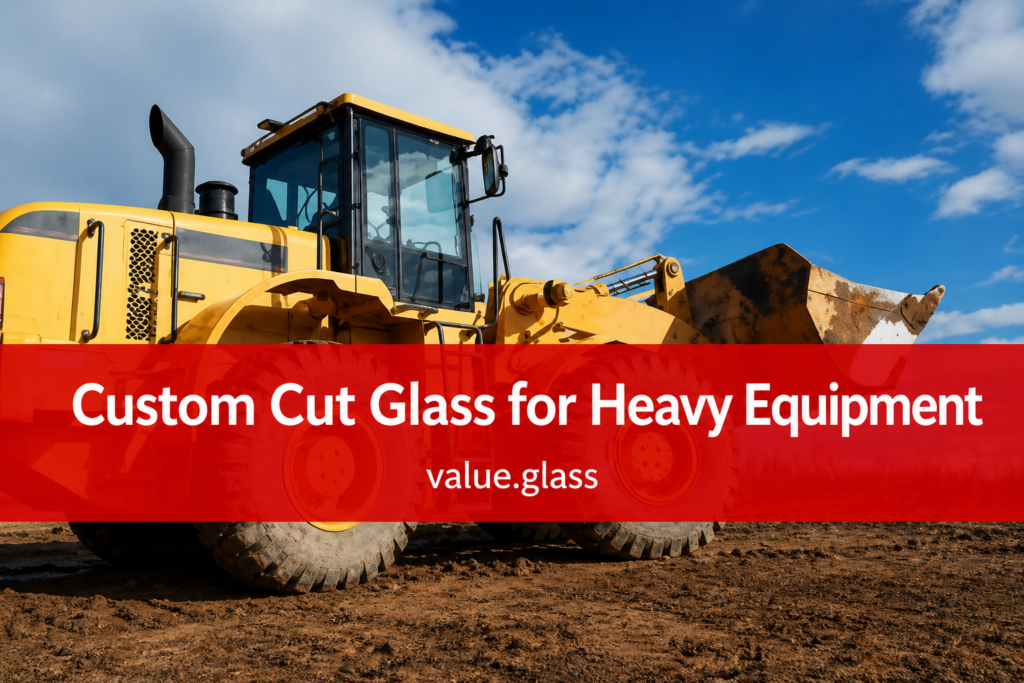
A machine with an unusual or discontinued glass panel needs more than a rough measurement and a piece that looks close. The replacement must suit the equipment, the opening, and the way the glass is held in place.
valueGLASS works with heavy equipment and custom flat-glass projects in Kitsap County. We start by identifying what the machine needs and whether an available replacement part or a custom solution is appropriate.
Send the machine details first
The manufacturer, model, serial number, and location of the damaged panel help us research the job. Photos of the opening, frame, markings, and remaining glass can also be useful when they can be taken safely.
Tell us if the cab has been modified or repaired. A panel listed for the original machine may not fit an altered opening, and a damaged frame can need attention before new glass is installed.
Flat, curved, laminated, and tempered are different jobs
Custom flat glass can be an option for suitable applications. Curved or specialized panels may need a manufactured replacement. The required material, thickness, shape, edge treatment, and mounting all affect the approach.
Tempered glass is not trimmed to size after tempering. It must be made to the required dimensions through the appropriate manufacturing process. Do not assume that any safety-glass panel can be cut or drilled on site to fit an equipment cab.
Fit includes the surrounding components
- The condition and dimensions of the opening.
- Seals, gaskets, channels, or bonded mounting areas.
- Hinges, latches, or sliding hardware where applicable.
- Clearance and access needed for installation.
Those checks help identify whether the problem is limited to glass. Replacing a panel in a distorted opening can leave the underlying issue unresolved.
Plan the work around the equipment
Let us know where the machine is located and how it can be made safely accessible. On-site work may be possible, while measuring, sourcing, fabrication, and installation may require separate stages. We will discuss availability rather than promise every custom panel in one visit.
Visit our heavy equipment and vintage glass service or call 360-932-3297. Bring the machine information so we can plan a replacement that matches the job.
Related Categories: Heavy Equipment Glass Guides