
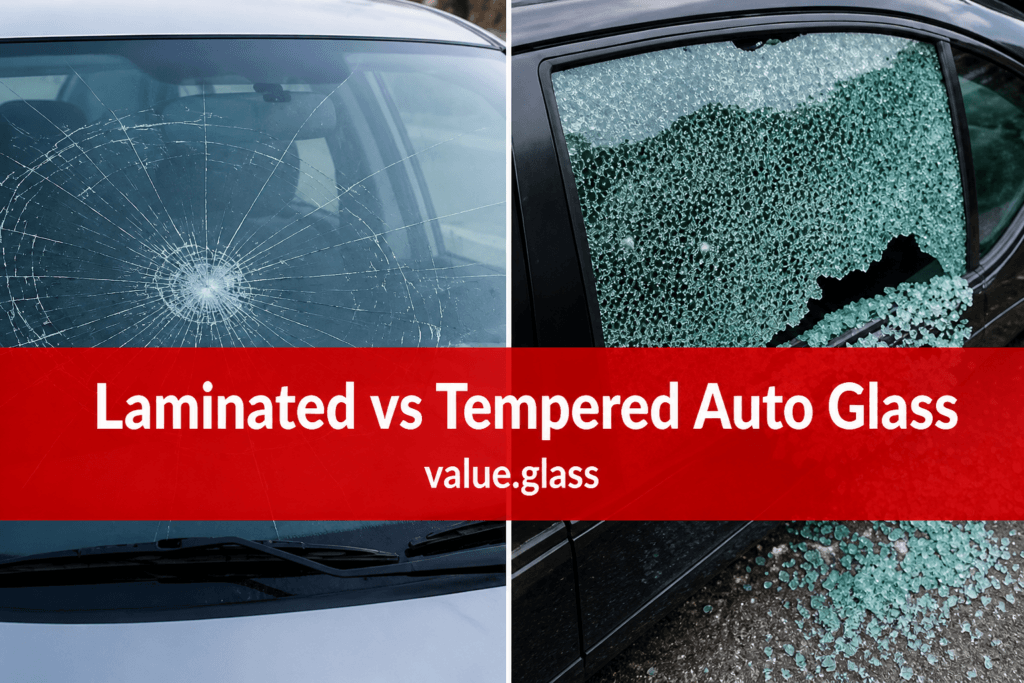
Most of the time when people ask about laminated versus tempered car glass, they’re really trying to figure out what is in their vehicle and, crucially, why it’s important. At first glance, all car windows look pretty similar, but the different parts of your car use different glass types, and for very specific reasons. Knowing these differences between laminated vs tempered auto glass will help you with repairs, replacements, and, most importantly, your safety.
Laminated Vs Tempered Auto Glass
What Is Laminated Auto Glass?
It’s what you’ll find in most windshields. It’s made by sticking two pieces of glass together with a layer of plastic in the middle – that middle layer is the key.
When laminated glass gets damaged, it doesn’t explode into a million pieces. Instead, it will crack… but the plastic layer holds everything together. That’s why windshield cracks look like a spiderweb instead of just being a shower of glass. This is all by design. It keeps the windshield from falling apart during a crash. It also prevents glass from flying into the car. Moreover, it adds to the car’s overall strength and allows those little chips and cracks to often be repaired. Because of all this, laminated glass is a hugely important safety feature, doing a lot more than just keeping the wind and flying stones at bay.
What Is Tempered Auto Glass?
Your side and rear windows are almost certainly made of tempered glass. It’s heated during production to be much, much stronger than regular glass, but if it does go, it won’t fracture in long cracks like a windshield.
When it breaks, tempered glass doesn’t leave you with long, dangerous shards. Instead, it explodes into tons of smallish, fairly harmless pieces. This is all about lessening the risk of being badly sliced by sharp edges. And because it breaks so rapidly, a shattered side window will almost certainly require a full replacement; repairing it just isn’t really possible.
Why Cars Use Both Types of Glass
Cars have both types of glass as they’re for completely different jobs. Your windshield, being laminated, is designed to remain in one solid piece so you can see, and crucially, to help the car’s structure hold up. Side and rear windows (tempered), though, are meant to break cleanly and safely if you ever need to escape quickly. To put either glass type in the wrong location would be dangerous, and car makers are incredibly meticulous about this combination.
How This Affects Repairs and Replacement
That’s why certain glass damage is something a professional can fix, and other damage isn’t. Little chips or not-too-long cracks in your windshield are frequently repairable, as the laminated glass stays together. But tempered glass in the sides and back will shatter into many pieces and generally can’t be fixed. So, a little stone ding in the windshield is a quick fix, but a completely broken side window means getting a brand new panel.
Safety Differences You Should Know
The glass in your car has a direct effect on what happens during a crash. Laminated glass will remain as one piece in a collision, ensuring the airbags deploy as intended, and preserving the roof’s strength should the vehicle roll over. Tempered glass disintegrates into tiny pieces to minimize injury and allows a quick escape from the vehicle. Both types are about keeping you safe, just in different ways.
Why Proper Installation Matters
And knowing this difference is really helpful when you’re having work done on your car’s glass. Not all replacements are the same. Doing the job of installing it correctly is just as vital as the glass itself. A good repair place will use the correct glass for your car, fit it properly, and ensure it will function as it should. Using incorrect glass or a careless installation will affect both safety and how long the glass will last.
Understand Your Auto Glass Before You Need It Fixed
Most of us don’t think about car glass until it’s broken. But having even a basic grasp of laminated versus tempered glass will give you a much clearer understanding of what to expect when it’s damaged. It clarifies why you can repair some things but not others. And also why a correct replacement is more important than you might think. When a repair or replacement is necessary, this knowledge will help you make a sensible choice.
Related Categories: Value Glass Blogs