


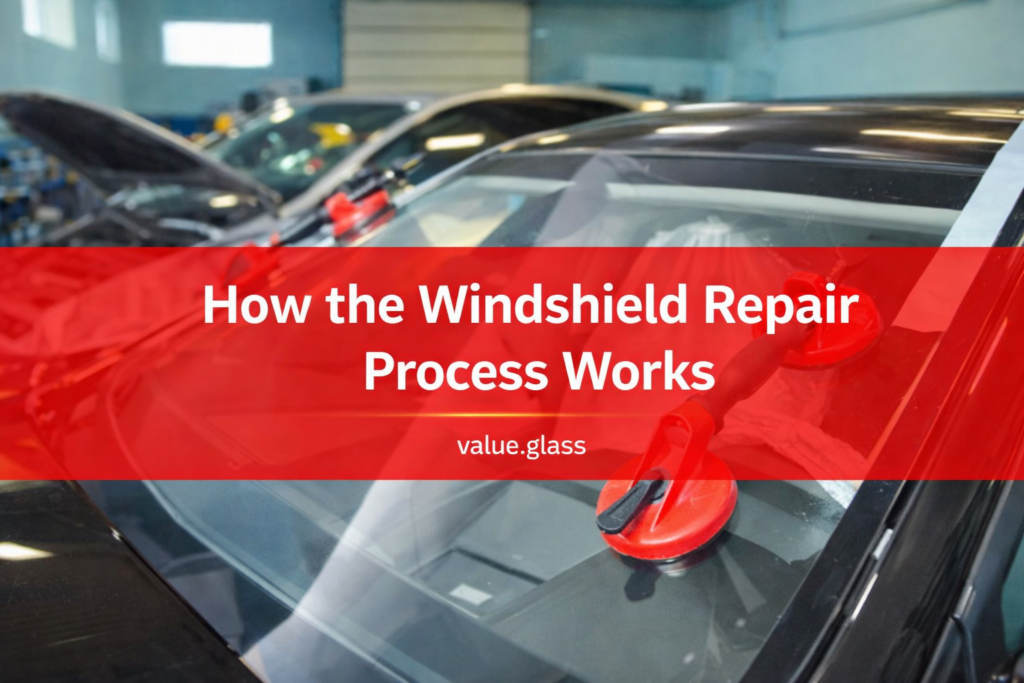
A windshield chip repair treats the damaged area while leaving the existing windshield in place. When the damage is suitable, that can be a practical alternative to replacement. At valueGLASS, the decision begins with inspection, not an assumption that new glass is the only answer.
Our self-pay rock chip repair price is $39.95. If we installed the windshield, ask about your free rock chip repairs for the life of that windshield when you contact us.
First, we assess the break
We look at the type of damage, its location and depth, any spreading cracks, and the condition of the break. Damage near the edge or in a sensitive viewing or camera area may need different consideration from a small isolated chip elsewhere.
A photo helps us start the conversation, but it may not settle every question. We explain when an in-person inspection is necessary and whether repair appears to be a sensible option.
Preparation matters
Contamination, moisture, or a previous repair attempt can affect the result. Let us know if anything has already been applied to the chip. Avoid household glue and other improvised fixes; they can make a later professional assessment more difficult.
The technician prepares the damaged area for the repair system. The method depends on the break and the equipment being used. This is controlled work on the damaged glass, not simply a coat of clear material painted over the surface.
Resin fills suitable damage
A repair system introduces resin into the break. The resin is then cured and the surface finished. The purpose is to stabilize repairable damage and improve its appearance while retaining the windshield.
Expect an honest explanation of the cosmetic result. A mark may remain visible after a proper repair. We will not promise an invisible finish for a break whose damage will still show.
Know what the appointment includes
Tell us your vehicle details, where the chip sits, and whether you are paying directly or asking about insurance. We can help check coverage if you want to use a policy. Coverage and deductible requirements depend on that policy; the self-pay price gives you a clear alternative to compare.
Repair does not involve removing and rebonding the entire windshield. If replacement is needed instead, we explain the different process, any required calibration, and the service schedule before you decide.
Get it assessed while you have options
There is no reliable promise that a chip will remain the same size for another week. Contact us while the damage is small, and let us determine what is appropriate for your glass.
Our auto glass repair team serves Bremerton and the rest of Kitsap County. Call 360-932-3297 or send a photo and vehicle details for the next step.
Related Categories: Auto Glass Repair and Replacement Guides, Windshield Repair Guides