
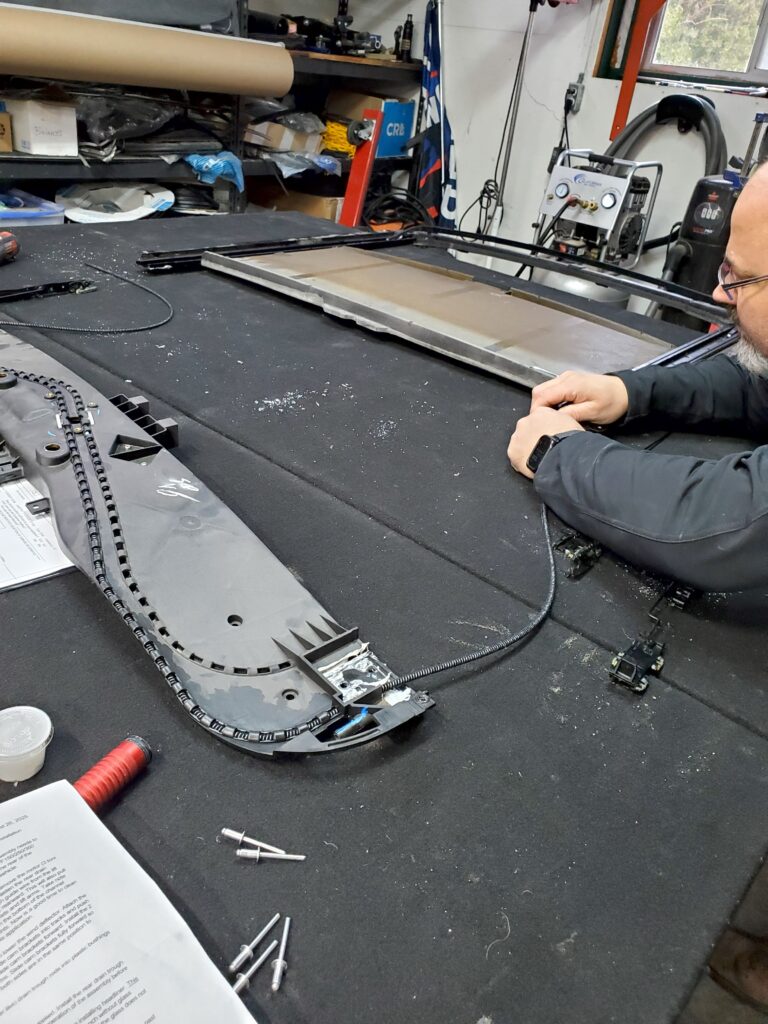
You press the switch, and nothing happens. Or maybe the sunroof starts moving, then stops halfway. Sometimes it tilts but will not slide. Other times it opens normally but refuses to close all the way.
If you are asking, “Why won’t my sunroof open?”, the frustrating answer is that several different parts can cause very similar symptoms. The switch, electrical system, motor, tracks, cables, guides, and glass all have to work together for the roof to move properly.
The good news is that the way the sunroof behaves can give you useful clues. You do not need to take the roof apart yourself, but paying attention to what it does when you press the switch can make the problem easier to explain and diagnose.
Start With What the Sunroof Is Doing
Before assuming the motor has failed, take a moment to notice the exact symptom.
Does the sunroof:
- Make no sound at all?
- Click or hum without moving?
- Move slowly?
- Sit higher on one side than the other?
- Open but refuse to close?
- Stop before it closes completely?
- Tilt normally but refuse to slide?
- Move a short distance and then reverse?
Those details matter. A sunroof not working at all may point in a different direction than one that still moves but feels slow, uneven, or stuck. If the roof is binding or sitting crooked, avoid repeatedly pressing the switch. Forcing a struggling mechanism can turn a smaller problem into additional damage.
When the Sunroof Won’t Open
A sunroof that will not open can have an electrical problem, a mechanical problem, or something as simple as an obstruction. If you press the switch and hear absolutely nothing, the issue could involve power to the system, the switch, wiring, a fuse, the motor, or another vehicle-specific control component. That does not mean one of those parts has definitely failed, but the lack of sound is useful information.
If you hear the motor or a clicking sound but the glass does not move, the mechanism may be binding or a track, cable, or guide may not be moving the way it should. Sometimes the problem is more straightforward. Dirt, leaves, or other debris can collect around moving areas of the sunroof and interfere with smooth operation. The important thing is not to guess at a failed part from one symptom alone.
When the Sunroof Won’t Close
A roof that opens but will not close can be especially stressful, particularly when rain is on the way. If you are wondering why your sunroof won’t close, first look for anything visibly blocking the opening or tracks. Do not put your fingers into moving parts or force the panel by hand.
On some vehicles, the sunroof system can also react to resistance while closing. If the roof starts to close and then stops or reverses, an obstruction, alignment problem, or resistance in the mechanism may be involved.
A sunroof that sits unevenly or appears lower on one side can also point to a mechanical or alignment issue. If the sunroof won’t close all the way, repeatedly cycling the switch is usually not the best approach. Note where it stops and whether you hear any unusual sounds, then have the system checked.
Slow or Uneven Movement Is a Warning Sign
A sunroof does not have to stop completely before something is wrong. If it suddenly moves more slowly than it used to, hesitates in the same spot, or one side appears to move differently from the other, pay attention.
Slow or uneven movement can be associated with resistance in the tracks or wear within the operating mechanism. Continuing to force the roof through that resistance can put additional strain on moving parts.
This is especially worth checking if the sunroof:
- Shudders while opening
- Tilts to one side
- Stops at the same point every time
- Needs several attempts to move
- Sounds different than it used to
Changes in how the roof moves are often more useful than simply saying the sunroof is not opening.
Clicking or Grinding Shouldn’t Be Ignored
A healthy sunroof should not suddenly start making loud grinding, repeated clicking, or scraping sounds. Those noises can indicate that something in the mechanism is moving under resistance or is no longer engaging the way it should. The exact cause varies by vehicle, so a noise by itself is not enough to identify a failed component.
A useful rule is simple: if the sound is new and the roof is also moving differently, stop operating it until you know what is happening. Continuing to run a mechanism that is clicking or grinding may make the original problem harder to repair.
What If the Sunroof Is Completely Silent?
If pressing the switch produces no movement and no sound, begin with the simple possibilities rather than assuming the entire sunroof mechanism is bad. Check the vehicle owner’s manual for any sunroof-specific operating conditions. Some systems only operate with the ignition or accessory power in certain positions.
It is also worth thinking about whether the problem appeared after:
- A dead or disconnected battery
- Recent electrical work
- A fuse issue
- Other electrical accessories stopped working
- Work around the headliner or roof
Some vehicles use initialization or relearn procedures after power loss, but the procedure is vehicle-specific. Follow the manufacturer’s instructions rather than trying a generic reset sequence found for another model. If there is still no response, professional diagnosis can help separate an electrical problem from a failed motor or mechanical issue.
What If It Opens but Doesn’t Close Properly?
A sunroof not closing correctly can show up in several ways. The glass might stop an inch short of the closed position. It may close and immediately reopen. It may sit slightly above or below the roofline. Or one corner may appear out of position.
Those symptoms can be related to alignment, resistance, an obstruction, or a problem within the operating mechanism. Avoid trying to push the glass into position while operating the switch. Sunroof assemblies are vehicle-specific, and forcing the panel can damage the glass or surrounding components. Instead, note exactly where it stops and whether the problem happens every time.
A Few Things You Can Check Safely
You do not need to disassemble the roof to gather useful information. Before scheduling an inspection, you can check:
- Whether the roof responds at all when you press the switch
- Whether you hear the motor, clicking, grinding, or other noises
- Whether the glass appears level
- Whether there is obvious debris around accessible track areas
- Whether the problem affects opening, closing, tilting, or all movement
- Whether the issue began after battery or electrical work
- Whether the roof leaks as well as having an operating problem
Avoid applying random lubricants or taking apart the tracks unless you know the procedure for your vehicle. The wrong product or an incorrect adjustment can create another problem instead of solving the first one.
When to Stop Using the Sunroof
You should stop repeatedly operating the roof if:
- The glass is visibly crooked
- You hear grinding or repeated clicking
- The panel is binding
- One side moves while the other does not
- The glass is cracked or damaged
- The roof starts moving and suddenly jams
- You have to push or pull the panel to make it move
At that point, the safest next step is to find out what is causing the resistance or loss of movement. If the glass itself is cracked or shattered, the problem may also require auto glass replacement, rather than attention to the mechanism alone.
Why the Same Symptom Can Have Different Causes
This is why searching “why is my sunroof not working?” rarely produces one universal answer. Two drivers may both have a roof that will not open, yet one vehicle could have an electrical problem while the other has a mechanical component preventing movement.
The vehicle year, make, model, roof design, and exact symptoms all matter. That is also why replacing a motor based only on a guess is not a good approach. The better sequence is to understand what the roof is doing, inspect the system, and then address the part that is actually causing the problem.
When It’s Time for an Inspection
If your sunroof remains stuck, will not open or close normally, sits unevenly, or makes noises it did not make before, it is worth having the system inspected before you keep operating it.
valueGLASS works with non-functioning sunroofs, sunroof mechanisms, leaks, and damaged glass. The goal is to determine what part of the system needs attention instead of treating every sunroof problem as the same repair. If your roof needs professional attention, learn more about our sunroof repair and replacement service.
A Stuck Sunroof Doesn’t Always Mean the Same Repair
When a sunroof stops working, the symptom is only the starting point. A silent roof, a slow-moving panel, a roof that will not close, and one that makes grinding noises can all point to different problems. Paying attention to those details and avoiding the temptation to force the mechanism can help prevent additional damage.
If you are in Bremerton, Silverdale, Port Orchard, Poulsbo, or elsewhere in Kitsap County and your sunroof is not operating properly, valueGLASS can help inspect the problem and explain the next step. Contact valueGLASS and tell us what the roof is doing, including any noises, uneven movement, leaks, or damaged glass.
Related Categories: Auto Glass Repair and Replacement Guides, Sunroof Repair and Replacement Guides